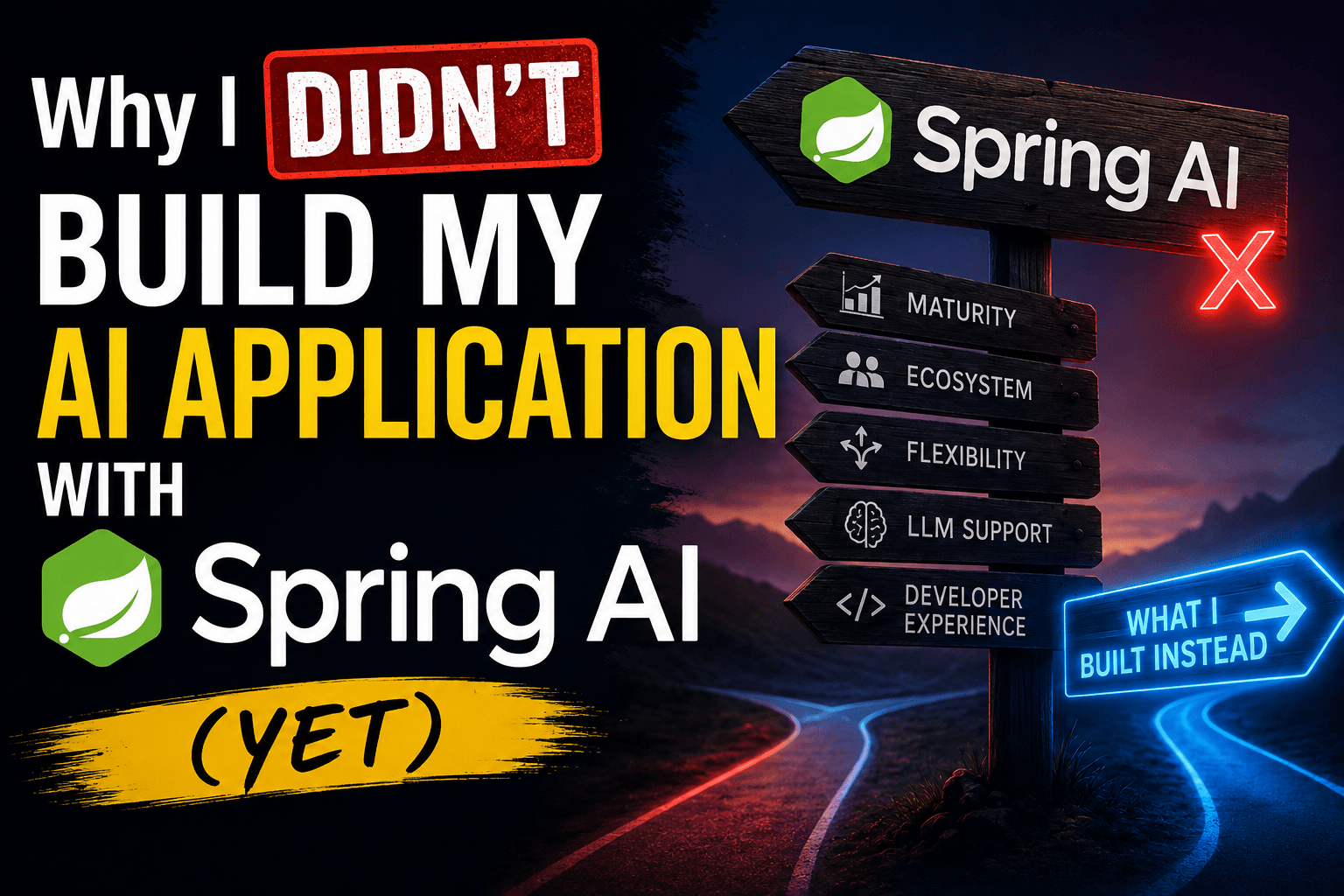
Why I Reconsidered Spring AI for Building AI Applications
When I first started building AI-powered apps, my instinct was to reach for what I knew: Java and Spring Boot. Spring has always been my go-to for backend work, and Spring Boot offers one of the smoothest developer experiences in the Java world. So I assumed Spring AI would bring that same maturity to AI development.
It didn't—at least, not yet.
That doesn't make Spring AI a bad project. It's improving quickly and getting more capable with every release. But after building real-world AI systems, I realized I was spending more time working around ecosystem gaps than actually solving product problems.
So I made a change. And I learned a lot by taking the long way.
Spring AI Shines for Integration
Spring AI does a great job of connecting AI capabilities to existing Spring applications. You can quickly hook up to:
- OpenAI
- Anthropic
- Azure OpenAI
- Ollama
- Vector databases
For straightforward use cases like chat completion, embeddings, or basic document retrieval, it just works. If you're adding AI to an existing enterprise app, Spring AI is a solid, pragmatic choice.
But the Python Ecosystem Moves Faster
The real challenge isn't Spring AI itself—it's the ecosystem around it.
Nearly every major AI framework, research project, and production library launches in Python first. Some examples:
- LangChain
- LangGraph
- LlamaIndex
- AutoGen
- CrewAI
- DSPy
- PydanticAI
- MCP SDKs
- Most new model integrations
When a new capability drops, the Python community usually has libraries, examples, and tutorials ready to go. The Java ecosystem often follows later.
Documentation: The Hidden Multiplier
One thing I noticed fast: the difference in learning resources.
When I hit a wall with Python libraries, I could almost always find:
- Official docs
- GitHub discussions
- Community examples
- Blog posts
- YouTube tutorials
- Reddit threads
For advanced Spring AI topics, resources were much thinner. That gap slows down experimentation and makes troubleshooting harder.
AI Development Is More Than Just Calling an LLM
Modern AI apps aren't just about generating text. Real systems often involve:
- Agents
- Tools
- Retrieval-Augmented Generation (RAG)
- Memory
- Structured outputs
- Model Context Protocol (MCP)
- Multi-agent workflows
- Vector databases
- Streaming
- Human-in-the-loop interactions
Python libraries tend to surface these concepts earlier, with more community support and examples.
I Wanted to Understand the Building Blocks
At some point, I realized I didn't just want to use AI frameworks—I wanted to understand how they worked.
So I stopped chasing the highest-level abstraction and started learning the fundamentals:
- How embeddings work
- How vector databases retrieve information
- How tools are executed
- How agents plan tasks
- How prompts influence behavior
- How context is managed
- How RAG pipelines are constructed
That foundational knowledge made every framework easier to pick up later.
Learning the Long Way Paid Off
It felt slower at first. More concepts. More docs. More trial and error.
But over time, I noticed something: I wasn't just learning a framework—I was learning ideas that applied everywhere. Whether I was using LangChain, LangGraph, LlamaIndex, or something else, the core concepts stayed the same.
That's a much more durable investment than memorizing a single API.
This Isn't Spring AI vs Python
This isn't about picking a winner. Spring AI is improving fast, and it's a good fit for Java developers integrating AI into existing services.
But Python has a significant head start. That shows up in:
- Library availability
- Community adoption
- Documentation
- Tutorials
- Experimental features
- Research implementations
If you want to explore the latest in AI engineering, Python is the broader playground—for now.
My Current Approach
These days, I use the strengths of both worlds:
- Spring Boot is still my choice for robust enterprise backends.
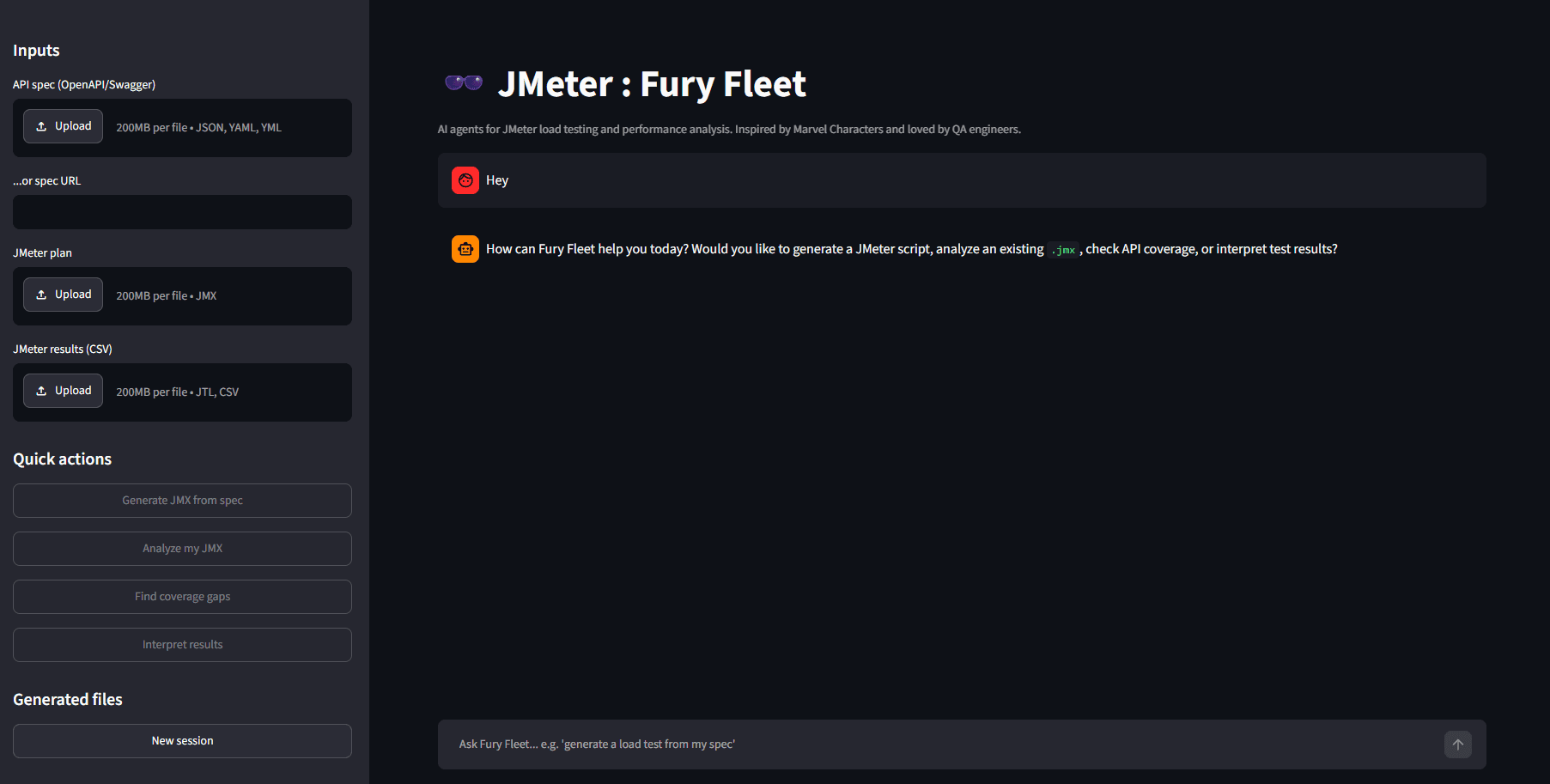
- Python is my primary language for AI engineering, agentic workflows, and rapid experimentation.
Instead of forcing everything into one stack, I treat AI as its own service when it makes sense. That separation keeps each part focused on what it does best.
Final Thoughts
If you're a Java developer curious about AI, you don't need to leave your ecosystem behind to pick up Python—you're simply adding new tools to your kit.
Frameworks and libraries will evolve, but if you focus on the fundamentals—retrieval, embeddings, agents, tools, prompts, orchestration—you'll be prepared for whatever comes next.
Sometimes, the longer route builds the strongest foundation.
Join the discussion
Nothing here yet — be the first to weigh in.