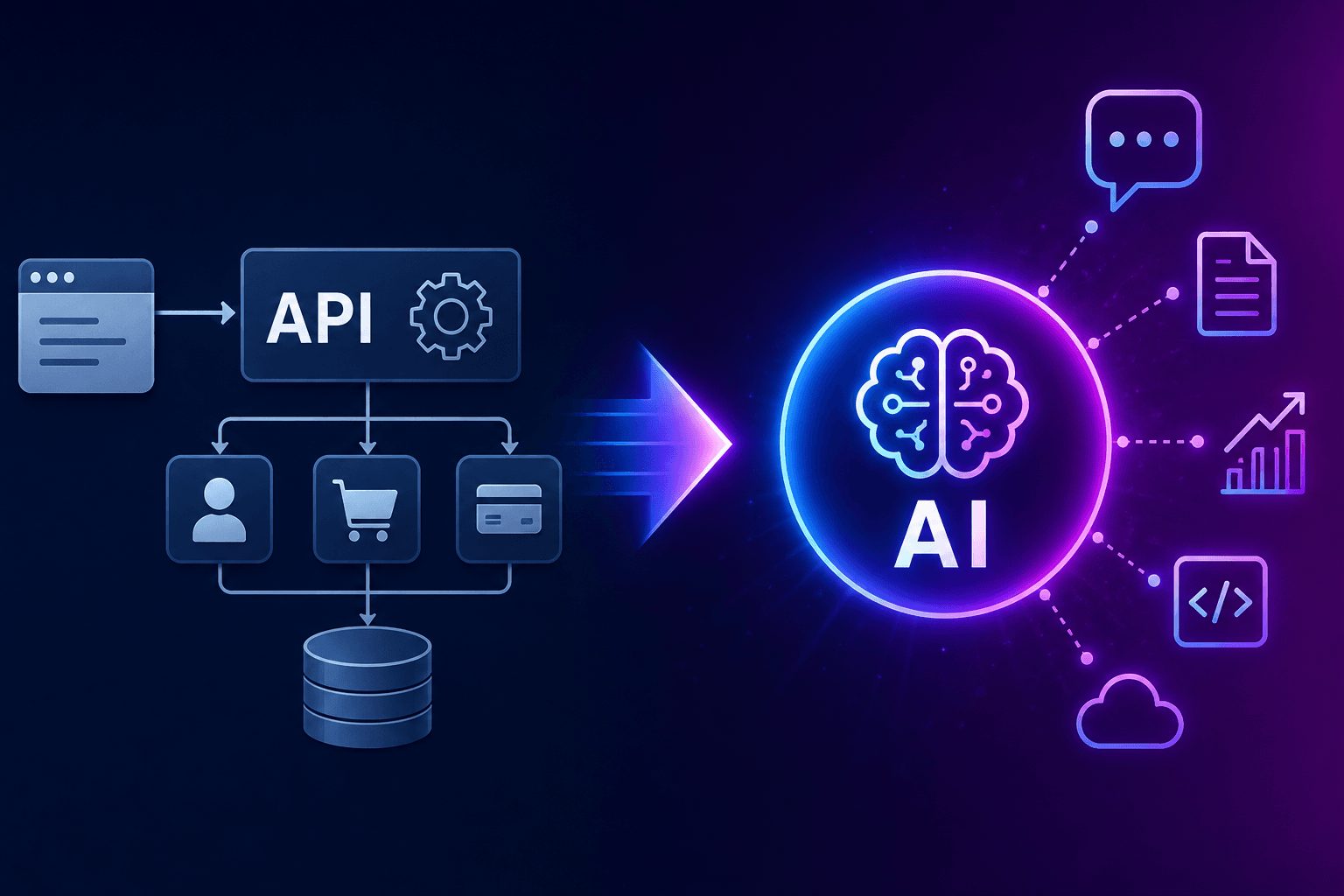
AI endpoints are changing the way I think about API architecture. Traditional APIs are straightforward: validate the request, execute business logic, return a response. This works well for deterministic systems, where the same input always gives the same output. But AI-driven tasks are inherently unpredictable—they just don't fit into this neat model.
Take a language translation API as an example. A classic endpoint would call a pre-programmed translation function, mapping inputs to outputs reliably. But an AI-powered endpoint can interpret context, idioms, and nuance differently every time. The same sentence might get translated in subtly different ways, depending on context or even randomness in the model.
How Do AI Endpoints Differ from Traditional API Endpoints?
Instead of a simple request-execute-response cycle, they involve multiple coordinated steps, similar to orchestration pipelines that manage complex workflows. There are several extra stages:
-
Prompt Preparation
Before querying the AI model, the endpoint has to prepare a prompt. This might include context, conversation history, and specific instructions. Getting this right is critical—prompt engineering is now part of the API's job.
-
Probabilistic Output Handling
AI models generate outputs that aren't guaranteed to be correct or even valid. The endpoint needs to validate these outputs, often against complex business rules or schema constraints.
-
Retries and Fallbacks
If the output fails validation, the endpoint might retry with different parameters, use a fallback model, or escalate to human review. Each option has a cost—whether that's computation, tokens, or time.
These steps turn AI endpoints into complex systems that demand careful design and resource management.
Concrete Takeaways for Implementing AI Endpoints
Here’s what I’ve learned about integrating AI endpoints:
-
Design for Flexibility
Build endpoints to handle AI's probabilistic nature. This means robust validation and error handling—assume the model will sometimes get it wrong.
-
Monitor Costs
Track usage and costs, especially if you’re using third-party AI services. Implement rate limiting and input restrictions to avoid surprise bills.
-
Enhance Security
Strict input validation and output verification are non-negotiable. This protects against malicious use and helps ensure data privacy.
-
Iterate and Test
Continuously refine your endpoints based on real-world feedback. Testing should include scenarios that validate how the AI handles edge cases and unexpected inputs.
Addressing these points helps you take advantage of AI endpoints' strengths while managing their risks.
Impact on Data Processing and Response Times
AI endpoints can seriously affect data processing and response times. Traditional APIs operate within predictable time frames. AI endpoints, not so much.
First, prompt preparation and context gathering add latency. Then, the AI model's response time can vary based on its complexity and current load. Finally, post-processing—validating, retrying, or repairing the output—adds more delay.
Sometimes, AI endpoints can handle complex data tasks quickly (like summarizing a huge dataset). But overall, the probabilistic nature and extra handling steps introduce new inefficiencies.
Security Considerations for AI Endpoints
Security is a major concern with AI endpoints, mostly because of their unpredictability and the sensitive data they often handle. Here are a few specific challenges:
-
Input Validation
AI endpoints must guard against malicious inputs that could exploit the model or burn through your usage credits. Without strict controls, someone could inject prompts that exhaust your AI budget.
-
Data Privacy
AI endpoints often process sensitive data. This raises the risk of data leaks or unauthorized access. It's important to comply with data protection regulations.
-
Output Verification
Since AI outputs can vary, verifying that responses are safe and appropriate is essential. That means filtering out harmful, biased, or nonsensical content the model might generate.
Robust validation, monitoring, and logging are essential for AI endpoints—much more so than for traditional APIs.
Real-World Applications of AI Endpoints
AI endpoints are beginning to make significant impacts in various industries. Here are a few examples I’ve seen:
-
Customer Support Bots
AI endpoints power chatbots that handle customer queries using natural language processing. This improves response times and reduces the need for human agents.
-
Content Moderation
Platforms use AI endpoints to automatically detect and flag inappropriate content—hate speech, spam, and more—in user submissions.
-
Medical Diagnosis
AI endpoints are being explored to help analyze patient data and suggest possible conditions or treatments, potentially assisting doctors with complex diagnoses.
These use cases show how AI endpoints can manage tasks that require understanding context and nuance—things traditional APIs just can’t handle.
Trade-Offs in Adopting AI Endpoints Over Traditional APIs
Switching to AI endpoints comes with trade-offs:
-
Complexity vs. Capability
AI endpoints can handle tasks that traditional APIs can't touch. But they’re more complex to design, test, and operate.
-
Cost
Running AI models—especially third-party ones—costs more. There are API usage fees, compute costs, and sometimes unpredictable token consumption.
-
Reliability
AI endpoints might return different results for the same input. This makes testing and validation harder. Ensuring consistent, reliable outputs means adding extra layers of validation and fallback logic.
Despite these challenges, AI endpoints offer powerful new capabilities. For tasks that benefit from AI's strengths, the trade-offs are often worth it.
Join the discussion
Nothing here yet — be the first to weigh in.